
Close

Modern combat sports operate under strict regulations, but early fighting was an exercise in pure, unregulated violence. Men stepped into dirt rings with zero safety protocols to determine the absolute toughest man alive. To grasp the bloody origins of hand-to-hand combat, you must examine bare-knuckle boxing. They ignored rounds and weight classes because the only goal was sheer, undisputed survival.
Top Pick: Top 10 Boxing Matches that People Still Rewatch in 2026
To actually comprehend how these fights operated, you have to understand the specific legal framework governing the violence. The bare-knuckle boxing rules were not designed to protect the fighters; they were explicitly designed to maintain basic order for the gamblers.
There was no bell ringing every three minutes to save an exhausted fighter. A round only ended when a man was physically knocked down to the dirt or forcefully thrown to the ground by his opponent. You could theoretically fight for twenty uninterrupted minutes if neither man fell. Once a fighter hit the deck, his corner had exactly thirty seconds to pick him up, wash the blood off his face, and drag him back to a chalk line drawn in the center of the ring, known as the "scratch."
Modern boxing completely outlaws wrestling. Early combat actively encouraged it. The London Prize Ring rules explicitly allowed fighters to grab their opponents above the waist and violently throw them to the ground. Fighters routinely wore heavy boots fitted with iron spikes to maintain their grip in the mud, and stomping on a fallen opponent was a frequently utilized tactic before Jack Broughton intervened.
Fights did not go to a judges' scorecard. There was no point system. The fight only ended when a man was physically incapable of walking back to the center scratch line under his own power or when his corner threw in the sponge to prevent a fatality. You either knocked your opponent unconscious or broke his body down until he quit.
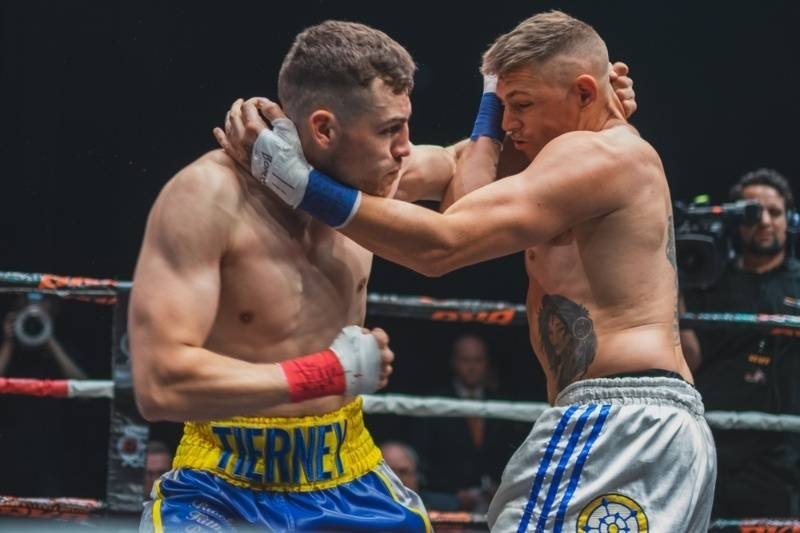
The bare knuckle boxing history ignored weight divisions are explained below:
The promoters and the massive crowds of aristocrats placing heavy wagers did not want to know who the best 145-pound fighter was. They wanted to know who the undisputed, absolute best fighter in the entire country was, regardless of their physical dimensions. The sport was built entirely on the David versus Goliath narrative.
The sheer concept of "cutting weight" or managing hydration levels did not exist. Fighters trained by running through the countryside, lifting heavy stones, and drinking massive quantities of stout beer. Because the fights often lasted for hours, raw cardiovascular endurance and bone density mattered significantly more than strict body mass.
These fights were illegal underground events entirely funded by heavy betting from wealthy patrons. The gamblers thrived on massive physical mismatches because they created volatile betting odds. Putting a towering giant against a fast, nimble brawler generated massive public interest and drove the betting pools to staggering financial heights.
Must Read: Shadow Boxing Techniques to Improve Your Strength & Agility
You cannot separate the violence of the era from the men who actually survived it. The most famous bare-knuckle fighters were not just athletes; they were massive cultural icons who defined masculinity for entire generations.
Figg is widely recognized as the absolute first English champion, claiming the title in 1719. He did not just throw punches. He was a master of the broadsword and the quarterstaff. He approached bare-knuckle fighting with the exact same lethal precision of a highly trained fencer, utilizing distance control and brutal footwork to systematically destroy heavily favored street brawlers.
Broughton was a dominant champion who literally changed the sport forever after accidentally killing an opponent in the ring in 1741. Horrified by the fatality, he aggressively formulated the Broughton Rules to ban eye-gouging, hitting a man while he was down, and strikes below the waist. He did not introduce these rules to make the sport soft; he introduced them to keep the fighters alive long enough to fight again.
Sullivan represents the absolute pinnacle and the final chapter of the bare-knuckle heavyweight lineage. Known as the Boston Strong Boy, he toured the country offering massive cash rewards to any man who could survive four rounds with him. In 1889, he fought Jake Kilrain in a brutal seventy-five-round bare-knuckle war that lasted over two hours in the sweltering Mississippi heat, marking the last legitimate bare-knuckle heavyweight championship fight in history.
Politicians and local cops eventually choked the life out of the sport. By the late 1800s, relentless police raids made it too risky for promoters to keep running unregulated bloodbaths. That constant legal heat forced the transition to the Marquess of Queensberry rules in 1867. Suddenly, fighters faced timed rounds, weight limits, and padded gloves. But here is the brutal truth: those gloves weren't introduced to soften blows to the head. They were added to stop fists from snapping on bone, effectively killing the raw, bare-knuckle era forever.
Understanding the ruthless mechanics of Bare-Knuckle Boxing forces you to respect the massive evolutionary leap the sport took when it finally integrated gloves and timed rounds. The modern combat arena owes its entire existence to the savage, unregulated brawls that built the foundation of professional fighting.
Fighters constantly suffered from severe metacarpal fractures, commonly referred to as a "boxer's fracture." Striking the hard, dense bone of an opponent's skull with an unprotected fist frequently shattered the fragile bones in the human hand, forcing combatants to target the softer tissue of the body to preserve their hands for the later stages of a marathon fight.
Fighting on chewed-up dirt and slick mud instantly killed any chance of fancy footwork. You cannot dance or pivot away from a punch on a terrible, uneven outdoor surface. Fighters were forced to plant their feet flat, stand right in the pocket, and just eat the hits.
Traditional fighters occasionally used rudimentary leather thongs or basic cloth strips to bind their wrists to prevent severe sprains, but these wraps provided absolutely zero padding over the knuckles. The primary goal of the binding was simply to keep the wrist joint locked and stable to prevent it from collapsing upon heavy impact with an opponent's jaw or ribcage.


 What is Ring IQ in Boxing and How Can You Train it Better?
  What is Outboxing Style, and How Can You Master It?
  Southpaw Stance Explained: Techniques & Advantages
  Top 5 Boxing Defense Drills that Every Boxer Needs to Master
  Top 10 Boxing Matches that People Still Rewatch in 2026
  Best WWE Heels Ever: 10 Villains Fans Loved To Hate
  Orthodox Vs. Southpaw: Understand Key Stance Differences