
Close

A lot of players love matches and tolerate training. That is normal. The game is the fun part. Still, the difference between a player who looks sharp on game day and one who disappears for long stretches usually comes down to what happens in practice. Drills are not glamorous, but they build the habits that show up when pressure kicks in.
That is why coaches keep coming back to the same basics. Clean touches, better movement, quicker feet, smarter passing, and calmer finishing rarely happen by accident. They come from repetition that has some purpose behind it. The right session does not need to be fancy. It needs to teach the body what to do before the mind has time to panic.
For players trying to improve steadily, the best football drills are usually the ones they can repeat often without losing focus. Good training should feel challenging, but it should also feel useful. If a drill looks impressive and does nothing for real match situations, it is probably not worth much.
The best sessions usually work on things that show up every weekend. A player does not need twenty different exercises. They need a small group of drills that improve how they move, receive, pass, turn, and finish. That is where real progress usually begins.
Players often ask, “What are good football drills?” The honest answer is that the best ones are practical. They should improve something specific and be simple enough to repeat without confusion. Below are ten drills that do exactly that.
Cone dribbling is basic, but it stays useful at every level because close control never stops mattering. The player sets up cones in a line or slight zigzag and moves through them using short touches. The focus should stay on control first, then speed after that.
This drill helps with:
A lot of players rush this one and turn it into a sprint. That misses the point. The better approach is to stay neat, stay low, and keep the ball close enough to change direction at any moment.
A wall is one of the best training partners a player can have. It does not complain, it does not get tired, and it sends the ball right back if the pass is clean enough. That makes wall passing one of the smartest choices for solo football training.
A player can work on the following:
This drill seems simple until the tempo rises. Then it becomes demanding in the best possible way. It teaches a player to prepare early, adjust body shape, and stay focused through repetition.
The first touch-box drill teaches players how to receive the ball with some control instead of just stopping it. A small square is marked out, and the player works on taking the ball into different corners of the box with the first touch.
This matters because a first touch can decide what happens next. A clean touch creates time. A poor one invites pressure. That is why so many coaches rate this as one of the most useful answers to the question, What are good football drills?
The player should vary the surface used for control:
Ladder work is not really about showing fast feet for social media clips. It is about control, balance, and coordination. Football players change direction constantly, and messy footwork often leads to wasted movement.
A short ladder session can improve the following:
The key is to stay sharp rather than mindless. Sloppy reps do not help much. Clean foot placement matters more than flying through the ladder as fast as possible.
Football fitness is not built on long, steady running alone. The sport asks for bursts, recovery, then another burst right away. Shuttle sprints train that pattern better than most traditional conditioning work.
A player sprints to one marker, turns, comes back, and repeats over short distances. It sounds rough because it is rough. Still, it works. This remains one of the best football drills for players who want better game intensity rather than just better endurance on paper.
Short rest periods can make it even more effective, though form should not completely fall apart.
Juggling gets dismissed too often as something kids do for fun, but it builds touch, rhythm, timing, and concentration. It also teaches players how the ball moves off different surfaces, which helps more than many realize.
A smarter juggling session might include:
It is also ideal for solo football training because it needs almost no setup. A few focused minutes each day can lead to noticeably better comfort on the ball over time.
On a Similar Note: Best German Football Players of All Time and Their History
This drill brings timing and technique together. One player delivers from a wide area while another attacks the space and finishes. Even when training alone, the same idea can be practiced by serving the ball into an area and arriving to meet it.
This works on:
It is one of the best football training drills and exercises because it feels close to the real game. Players are not just hitting random shots. They are learning how to arrive in the right place at the right moment.
Every attacker needs a few moves they trust. They do not need twelve tricks. They need two or three that feel natural and can be used at speed. A one-on-one drill helps with that.
If another player is available, they can act as a live defender. If not, cones can stand in as markers for changes of direction. The point is to practice approach speed, body feints, and quick separation after the move.
This drill improves:
Not every pass in football is short and tidy. Sometimes the game opens up and a longer ball changes everything. A long passing drill helps players hit targets over distance without just swinging wildly.
This drill should focus on:
It suits defenders and midfielders especially well, though any player can benefit. There is real value in knowing how to switch play or find a runner early.
Plenty of players can finish well when nobody is near them. Matches are different. There is less time, less space, and more noise. Shooting under pressure helps a player train for that reality.
The setup can be simple. Receive the ball, take a touch or two, and finish quickly before a defender closes or before a time limit runs out. That added urgency changes the drill completely.
For players wondering again, what are good football drills? This one deserves a place near the top because it brings technique and pressure into the same exercise, which is much closer to what actually happens in games.
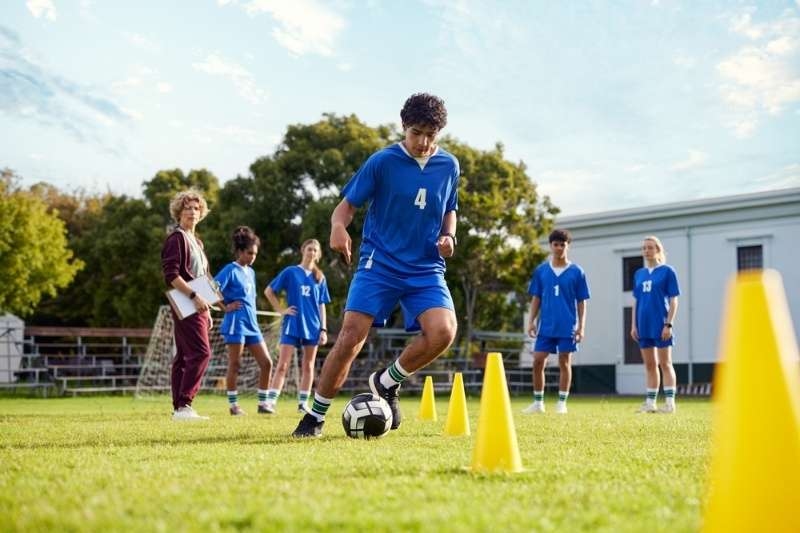
A drill is only as useful as the focus behind it. Players sometimes move from one exercise to the next without really locking in. That creates tired legs, but not always improvement.
A better session usually includes:
It also helps to stay honest during training. If touches are getting sloppy, the player should reset instead of pretending every rep is good. That kind of honesty is often what separates average improvement from real growth.
Read More: The Ranking of the Most Valuable Football Teams in the World
Most players do better with a routine that is simple enough to follow. Overcomplicated plans tend to collapse after a few days. A cleaner structure is easier to stick to and easier to improve over time.
A weekly setup could look like this:
This kind of plan keeps training balanced without making every day feel the same. It also gives players a better chance to improve several parts of their game at once.
A player does not need to change drills every week just to keep things interesting. In fact, too much variety can slow progress because the body never gets enough repetition to improve a skill properly. A better idea is to keep the same core drills for several weeks, then make small adjustments such as changing pace, distance, or pressure to keep the sessions challenging without starting from scratch.
Yes, they can, especially if they train with intention instead of just kicking a ball around. A coach can speed things up by correcting mistakes, but solo sessions still have huge value when players stay disciplined. The biggest gains usually come from focused repetition, video review, and honest self-assessment. A player who trains carefully alone can improve much faster than someone with team sessions only but little attention to detail.
One of the biggest mistakes is rushing every rep as if speed alone proves progress. In reality, poor quality at high speed often turns into bad habits. Players improve more when they start under control, understand the movement, and then increase intensity gradually. Another common mistake is ignoring the weaker foot, which creates limits that show up quickly in matches when time and angles are tight.


 What Is a Touchback in NFL Football? A Simple Rules Guide
  Who are on the FIFA Club World Cup Winners List, 1930-2026?
  How are Football Wearables Changing the Modern Game?
  Best Plyometrics for Soccer: How to Build Match-Day Power?
  Understanding Different Football Positions & Their Roles
  The Ranking of the Most Valuable Football Teams in the World
  NFL Defensive Schemes: How Modern Defenses Stop QBs