
Close

Boxing is a sport whereby minor changes can make a lot of difference in the way a boxer will box. This variation of boxing technique is known as the Southpaw Stance.
Unlike the orthodox stance, which is led by the left hand while power is delivered using the right hand, the southpaw stance is a boxing stance whereby the right hand is placed at the front while power is delivered using the left hand.
In the Southpaw Stance, the fighter stands with the right foot forward and the left foot backward. In this stance, the right hand is the leading hand, while the left hand is the power hand.
It is a mirror of the orthodox stance whereby the left hand and foot lead, while the right hand throws power shots.
The fundamental positioning of the stance involves:
Apart from changing the hand and feet position, the stance is much more than that.
The most significant distinction between southpaw boxing and orthodox boxing lies in the positioning of the lead side and the power side.
For an Orthodox stance:
For the Southpaw stance:
This difference makes for a unique fight because fighters are accustomed to fighting an orthodox boxer and their defensive strategies might fail when facing a southpaw.
The major difference tactically will be with regard to angles. A southpaw will tend to place his lead foot outside of his opponent’s lead foot so that he has an advantage in his rear left hand.
Also Check: Bare-Knuckle Boxing: The Raw Roots of Modern Boxing
The difficulty in facing southpaw-stance boxers in boxing is the fact that many boxers have little experience facing such opponents.
Boxers train most of the time against orthodox boxers. So when facing a southpaw, their timing and reflexes will be a bit slow.
Some common advantages are:
Angles unfamiliarity:
Their attacks come from the other side of what they normally attack in training.
Power hand position:
This means that the rear left hand can form a direct line to their opponent’s target.
Rhythm difference:
Southpaws attack in rhythms that interrupt the normal combination of an opponent.
Proper preparation:
A boxer who frequently trains as a southpaw has faced more orthodox boxers compared to an orthodox fighter who faces southpaws.
However, this does not mean that the southpaw stance alone is an advantage. A well-trained orthodox boxer can still cope with it.
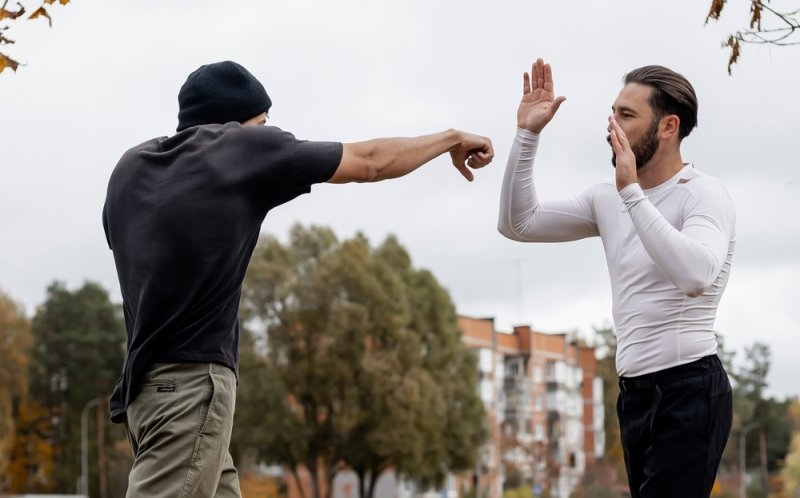
Learning the Southpaw Stance involves far more than just changing the placement of your feet. The fighter must be able to implement techniques that capitalize on the stance.
One of the key punches used by southpaw fighters is the straight left.
Since the left hand is the rear hand, it is powerful due to the hip action, footwork, and correct body mechanics that can produce power.
Some qualities of a good straight left are:
A predictable straight left is easily countered, so experienced fighters usually follow up a straight left with various setups like the jab and feints.
The leading right-hand jab is crucial for controlling distance.
A well-executed southpaw jab will help the fighter to:
Many successful southpaws use variants such as body jabs, double jabs, and feints to force their opponents into reacting to power punches.
Footwork is arguably the most crucial aspect of southpaw boxing. Sticking to the outside foot position while fighting an orthodox boxer will make the attacking angle easier while limiting the ability of the other fighter to land power shots.
The outside foot positioning will allow the southpaw to set up his straight left while avoiding the best power punches of his opponent.
It is advisable for southpaws not to face their opponents directly. Good footwork enables boxers to:
Although the style comes with several unique benefits, beginners tend to make several mistakes that limit the efficiency of the style.
First, it involves using too much of the left hand. Because the rear left can be an effective weapon, many people become predictable since they always look for a way of delivering knockout punches.
Second, defense is forgotten. Being a southpaw does not mean that the individual will not need to have good head movement, blocking, and footwork.
Some other mistakes involve:
The ideal southpaw combines the aspects of attack and defense.
Must Read: Why Electric Bikes are Dominating Cycling Trends in 2026?
For those who are learning the stance for the first time, practice is essential. Some of the techniques that can be used include:
Learning the southpaw stance from the orthodox stance is a slow process.
The southpaw stance provides boxers with an alternate way of moving around in the ring, their attacking angles, and their fighting styles. Although it could pose some difficulties for their opponents, it will only work well if they get the necessary training and techniques right. If you are naturally a southpaw fighter or want to become one, then you need to know the basics.
No. Left-handed boxers naturally use this stance. But right-handed boxers also learn the Southpaw Stance because it helps develop new angles and tactics.
This is because southpaw boxers can produce new angles of attack that orthodox boxers are not familiar with.
Some of the best punches when using the southpaw stance in boxing include the straight left, the jab, and the counters.
Yes. Beginners can be taught the stance through coaching, footwork, and practice.
This varies from individual to individual. Becoming proficient at Southpaw Techniques for Boxing requires regular practice and improvement in movement skills.



 What is Ring IQ in Boxing and How Can You Train it Better?
  What is Outboxing Style, and How Can You Master It?
  Bare-Knuckle Boxing: The Raw Roots of Modern Boxing
  Top 5 Boxing Defense Drills that Every Boxer Needs to Master
  Top 10 Boxing Matches that People Still Rewatch in 2026
  Best WWE Heels Ever: 10 Villains Fans Loved To Hate
  Orthodox Vs. Southpaw: Understand Key Stance Differences