
Close

Stepping onto the diamond for the first time can feel overwhelming when watching fast plays unfold. Understanding standard baseball positions gives new fans, young athletes, and supportive parents instant clarity during game days. According to official participation metrics from Major League Baseball, millions of youth players register for recreational leagues annually. Learning these foundational roles turns confusion into genuine excitement for the sport.
Watching players move seamlessly across the diamond brings sheer joy when you understand their tactical responsibilities. You deserve to feel confident and connected every time you watch or play America's favorite pastime.
In this comprehensive guide, we explore all positions in baseball, detail baseball field positions, explain baseball position numbers, cover key defensive duties, and highlight how offensive roles like the designated hitter impact game strategy.
Every defensive role on the diamond corresponds to a specific number for official scorekeeping. Scorekeepers use baseball positions by number to record plays cleanly without writing long descriptions.
The numerical system assigns numbers one through nine starting at the mound:
Understanding these baseball player positions helps parents and new players follow scorebooks easily during competitive games.
The inner diamond requires fast reaction times and precise throwing accuracy to make quick outs. Positioned inside the dirt perimeter, the pitcher stays centered on the mound (1) while the catcher sits behind home plate (2). Surrounding the bases, the first baseman (3), second baseman (4), third baseman (5), and shortstop (6) form an interconnected defensive arc designed to choke off ground balls.
The pitcher position in baseball anchors defensive play. Positioned on the raised mound, the pitcher dictates tempo, controls ball movement, and initiates every single play by throwing pitches toward home plate.
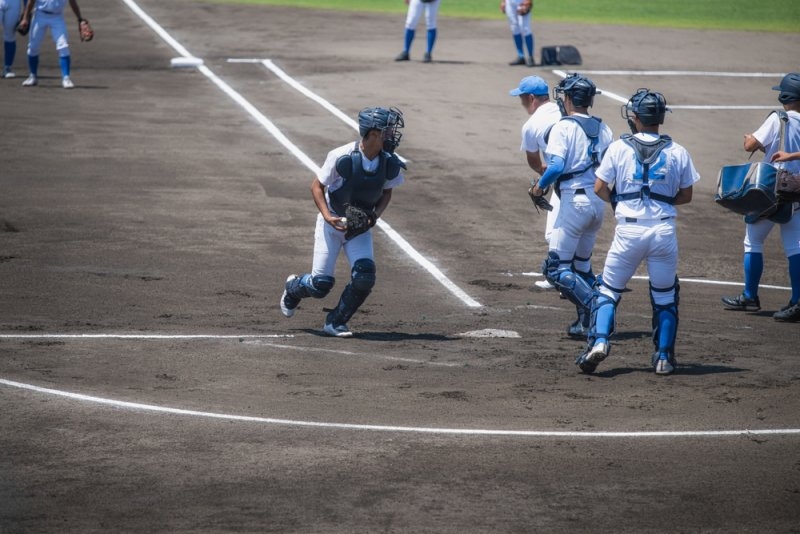
Squatting behind home plate, the catcher position in baseball directs team defense. Catchers frame incoming pitches, prevent stolen bases, call pitch sequences, and protect home plate during close scoring attempts.
The first baseman position requires exceptional stretching ability and soft hands. First basemen receive throws from other infielders to complete force outs and routinely catch high-speed grounders down the foul line.
The second baseman position covers the right side of the inner dirt. They field soft ground balls, turn double plays smoothly with the shortstop, and cover first base on unexpected bunt plays.
Known as the hot corner, the third baseman position demands quick reflexes. Third basemen stand close to batter contact points to stop rocket grounders and bunt attempts along the left baseline.
Positioned between second and third base, the shortstop position usually demands the most athletic defender. Shortstops cover expansive range, throw across deep dirt gaps, and lead overall infield communication.
Try This: Step-by-Step Guide on How to Swing a Baseball Bat for Beginners
Deep grass defenders prevent extra-base hits and field high fly balls before they hit the turf. Spanning across the deep outfield turf, left field (7), center field (8), and right field (9) form a wide protective wall behind the dirt, ensuring deep hits are tracked down cleanly before reaching the fence.
The left fielder position tracks pull hits from right-handed batters. Left fielders must accurately gauge tricky line drives curving toward the foul pole and throw backing shots to second base.
Covering the largest area, the center fielder position requires exceptional running speed and leadership. Center fielders catch deep fly balls and direct adjacent outfielders on overlapping fly zone calls.
The right fielder position features the strongest throwing arm among outfielders. Right fielders make long throws to third base or home plate to stop ambitious baserunners from taking extra bases.
Modern baseball strategies incorporate specialized roster spots beyond standard baseball defensive positions.
The designated hitter bats in place of the pitcher without playing a physical defensive position on the field. This offensive specialist focuses purely on hitting mechanics to provide consistent power production for team lineups.
A versatile utility player in baseball can play multiple field spots effectively across different innings. Coaches value utility athletes because they provide tactical lineup flexibility during long tournament schedules or unexpected injury situations.
Essential Reads: Who are the Greatest Baseball Players of All Time?
Mastering how players move across the diamond transforms how you watch and enjoy the sport. Throughout this guide, we defined official baseball positions, broke down infield positions, explored wide outfield positions, and clarified essential lineup concepts like the designated hitter and versatile utility player in baseball.
We also mapped out official scorekeeping numbers so you can follow live action with complete confidence. By understanding these individual roles and team dynamics, you gain a far deeper appreciation for every tactical decision made during match play.
Upgrading your gear with top-quality equipment enhances player performance and builds confidence on the field. Choosing high-performing gloves, balanced bats, and comfortable cleats helps athletes execute plays cleanly and enjoy every inning to the fullest. Discover premium athletic gear, expert equipment reviews, and player guidance today at Sports Reviews.
Coaches evaluate physical strengths like throwing velocity, running speed, hand-eye coordination, and catching confidence. Beginners often rotate through multiple spots during practice sessions to discover where their natural skills align best before settling into dedicated roster roles.
Catchers wear specialized protective gear, including a hard-shell helmet with a face mask, chest protector, shin guards, and an extra padded mitt. This heavy armor protects against high-speed pitches, foul tips, and accidental collisions at home plate.
The infield fly rule protects baserunners when batters hit easy pop flies in fair territory with less than two outs and runners on first and second. Umpires call the batter out automatically to prevent defenders from dropping the ball intentionally to turn easy double plays.
Left-handed throwers must turn their entire bodies around before throwing to first base, which wastes precious milliseconds. Because fast throw execution is critical across the left side of the infield dirt, right-handed players almost exclusively fill shortstop roles.
A defensive shift repositions fielders based on a batter's historical hitting tendencies to block frequent hit zones. Modern rule adjustments now require teams to keep two infielders on each side of second base with both feet on the dirt when pitches are thrown.


 Batting Average vs OPS: Which Statistic Matters the Most?
  Who are the Greatest Baseball Players of All Time?
  Who is the Richest Baseball Player in the World in 2026?
  5 Best Workouts for Baseball Players to Build Power Fast
  Best Baseball Cleats of 2026 Ranked by Position and Comfort
  Best Baseball Hitting Drills for Better Plate Consistency
  Baseball Analytics Is Transforming Modern MLB Strategy