
Close

Ferdinand Porsche famously remarked that racing is a necessity for those who crave adrenaline, and modern motorcycle racing proves that truth every weekend. Experiencing the sheer intensity of MotoGP Sprint Racing leaves fans holding their breath as riders fight elbow to elbow from lights out to the checkered flag. Official Dorna Sports viewership reports show that introducing Saturday sprint events boosted Saturday track attendance by over twenty percent globally while captivating millions of home viewers. When high-powered prototype bikes charge into turn one at over two hundred miles per hour, every fraction of a second reshapes championship standings.
Understanding this high-stakes format reveals why modern weekend schedules produce nonstop drama. By shifting traditional Saturday practice into competitive racing, organizers created a thrilling battleground where strategy and bravery merge.
In this tactical motorsport breakdown, we explain how sprint events operate, review official competition rules, examine point allocation systems, and highlight structural differences compared to other major motorsports.
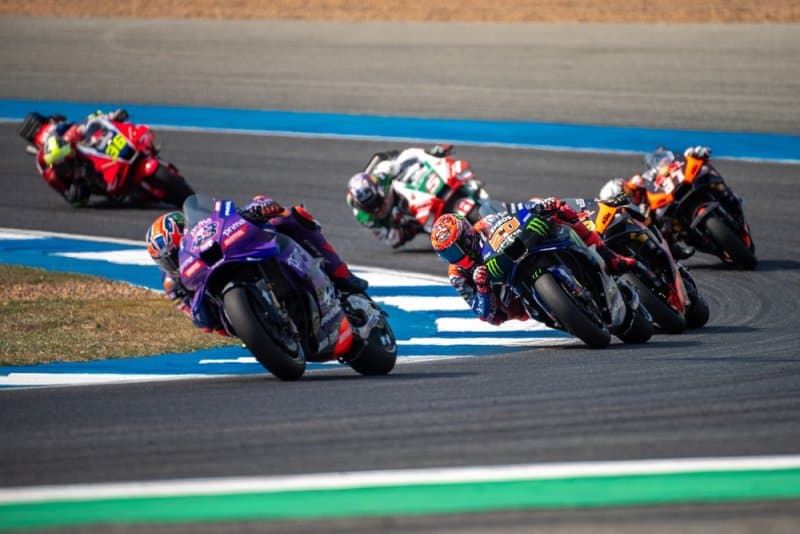
Asking what is MotoGP sprint racing introduces fans to a short format, flat-out sprint race held on Saturday afternoons at every Grand Prix weekend. Introduced to revitalize race weekends, this event sits between Saturday qualifying sessions and Sunday's traditional main feature race.
Unlike Sunday races where riders carefully manage rear tire degradation and fuel consumption, Saturday sprint events encourage maximum aggression. Riders push prototype machines to absolute physical limits across a short distance, creating pure racing spectacle from start to finish.
Understanding how do MotoGP Sprint races work requires looking at the official Grand Prix weekend timetable. Saturday morning starts with qualifying sessions (Q1 and Q2), which determine grid positions for both the Saturday sprint and Sunday main race.
| Race Feature | Saturday Sprint Race | Sunday Main Race |
| Race Distance | 50% of Main Race Laps | Full Distance (100%) |
| Fuel Limit | Restricted (Max 12L) | Standard (Max 22L) |
| Points Allocation | Top 9 Finishers (12 max) | Top 15 Finishers (25 max) |
| Grid Position Source | Saturday Q1/Q2 Session | Saturday Q1/Q2 Session |
Because grid positions remain identical for both events, a strong qualifying effort gives riders a crucial advantage across the entire weekend program.
Fans frequently ask how long is a MotoGP sprint race when planning their weekend viewing schedules.
Official regulations mandate that sprint events cover approximately fifty percent of the total lap count scheduled for Sunday's main Grand Prix. For example, if Sunday's race consists of 24 laps around a circuit, Saturday's sprint consists of exactly twelve laps. Most sprint sessions wrap up in under twenty minutes of non-stop racing action.
Must Try: Top 12 MotoGP 2024 Race Bike Liveries Ranked for 2024
The rules of MotoGP sprint racing balance technical fairness with aggressive on-track action.
The championship impact of Saturday racing revolves around the distinct distribution of MotoGP Sprint Points.
| Finishing Position | Sprint Points Awarded | Main Sunday Points Awarded |
| First Place | 12 Points | 25 Points |
| Second Place | 9 Points | 20 Points |
| Third Place | 7 Points | 16 Points |
| Fourth Place | 6 Points | 13 Points |
| Fifth Place | 5 Points | 11 Points |
| Sixth Place through Ninth Place | 4, 3, 2, 1 Points | 10, 9, 8, 7 Points |
Earning up to twelve additional points every Saturday means a rider can accumulate substantial championship gains over a multi-round season.
Comparing the difference between MotoGP sprint races and Formula 1 sprint races highlights contrasting weekend structures.
MotoGP features sprint races at every single Grand Prix on the calendar. Formula 1 selectively runs sprint events at only six chosen Grand Prix venues per season.
In MotoGP, Saturday qualifying sets grid positions for both Saturday and Sunday races independently. In contrast, Formula 1 utilizes separate sprint shootouts, ensuring sprint results do not alter Sunday's main starting grid.
Essential Reads: From Grand Prix to Le Mans: The Best Car Races in the World
Introducing Saturday sprint events has fundamentally transformed modern world championship motorcycle racing. Throughout this guide, we explored how short-format racing operates, outlined technical fuel limits, detailed championship point structures, and highlighted key structural differences compared to four-wheeled motorsport formats. We also examined how identical qualifying grids elevate the importance of Saturday morning sessions for teams and riders alike.
Watching world-class riders battle for every millimeter of track space creates an unforgettable spectacle every Grand Prix weekend. Elevating your understanding of weekend rules and points systems adds immense enjoyment to every lap of competition.
To stay updated on live race timing, access detailed rider analytics, and explore comprehensive motorsport coverage, visit our sports platform today to elevate your fan experience.
If rain starts during a dry sprint race, marshals wave white flags indicating a flag-to-flag scenario. Riders may enter the pit lane to swap machines fitted with wet-weather tires. Because sprint races are brief, teams must decide quickly whether to swap bikes or ride out damp track conditions on slicks.
No, sprint victories do not count toward historical Grand Prix win statistics. Sprint wins are recorded in a separate historical category. Official Grand Prix victories remain reserved exclusively for riders who win full-distance Sunday feature races, protecting long-standing historical records across decades of world championship racing.
Teams adjust bike setups for sprint sessions by reducing fuel load to improve agility and tweaking engine mapping for maximum power output. Because tire longevity is less critical over half the distance, mechanics dial in aggressive suspension settings that maximize immediate cornering grip rather than long-term tire preservation.
Stewards issue penalties for dangerous riding during sprint races just as they do in main events. Depending on severity, penalties range from long lap penalties served during the sprint itself to grid position drops applied to Sunday's main feature race or future Grand Prix events.
Yes, official reserve or replacement riders can compete in Saturday sprint events provided they participated in required practice and qualifying sessions. If a primary rider is injured during Saturday morning qualifying, an eligible team substitute who qualified may take their spot on the sprint grid.


 What is Formula Drift, and How Does it Work for Drivers?
 What are the Most Popular Motorsports in the Market Today?
 The Future of Electric Motorsport and Sustainable Racing
 Top 6 Bikepacking Gear Trends Cyclists Should Know for 2026
 Motorsport Crashes: Entertainment or Necessary Risk Today?
 Top 10 Youngest Formula 1 Drivers Ever to Hit the Grid
 F1 2025 Driver Line-Up Revealed: Who's Racing for Each Team?