
Close

Watching a modern football offense spread four receivers across the field creates an immediate tactical headache for any defensive coordinator. Deploying a Nickel Defense solves that mismatch by trading a heavier linebacker for an agile fifth defensive back who can match quick receivers step for step. According to Pro Football Focus tracking data, NFL teams utilize nickel packages on nearly 60% of all defensive snaps, making this subpackage the true modern base alignment across professional football. When quarterbacks attack the middle of the field with rapid slant routes, speed in the secondary becomes essential.
Understanding how coaches adjust defensive personnel elevates how you watch every Sunday matchup. It reveals the chess match happening before the snap as defenses counter-spread passing attacks.
In this comprehensive football breakdown, we explain what is nickel defense in football, examine the nickel defense formation, highlight the nickelback position in football, compare 4-2-5 and 3-3-5 alignments, and contrast nickel defense vs dime defense.
Asking what is nickel defense in football introduces one of the smartest tactical adjustments in gridiron history.
A standard base defense puts four defensive backs on the field, typically two cornerbacks and two safeties. A nickel package substitutes one linebacker or defensive lineman for a fifth defensive back. Because a nickel coin equals five cents in American currency, coaches named this five defensive back alignment the nickel package.
Understanding how does nickel defense work begins with recognizing offensive personnel groupings.
When an offense sends three or four wide receivers onto the turf, traditional linebackers struggle to keep pace with quick slot receivers in open space. By bringing in a fifth defensive back, the defense gains faster hip movement, tighter man coverage skills, and wider zone coverage range. Meanwhile, six defenders remain near the line of scrimmage to protect rushing gaps and pressure the quarterback.
Evaluating the nickelback position in football highlights one of the most demanding hybrid roles in modern sports.
The nickelback typically lines up inside over the slot receiver, sitting between the outside cornerback and the linebackers. Unlike outside boundary corners who use the sideline as an extra defender, a nickelback must defend two-way routes across the open middle of the field. This player needs cornerback speed to mirror agile pass catchers alongside safety toughness to tackle running backs and blitz off the edge.
Try This: Top 10 Rising Football Stars 2025 Making Headlines
Choosing the right nickel defense formation depends on a roster's front seven strengths and opponent rushing threats.
| Formation Type | Defensive Linemen | Linebackers | Defensive Backs | Primary Tactical Advantage |
| 4-2-5 Defensive Formation | 4 Linemen | 2 Linebackers | 5 Defensive Backs | Generates a strong four-man pass rush while maintaining gap integrity |
| 3-3-5 Defensive Formation | 3 Linemen | 3 Linebackers | 5 Defensive Backs | Disguises blitz angles and maximizes overall team speed in space |
The 4-2-5 defensive formation removes one linebacker from a traditional 4-3 front while keeping four down linemen on the line of scrimmage. This balanced structure lets defensive ends rush the passer immediately while two athletic inside linebackers patrol underneath zones.
The 3-3-5 defensive formation keeps three down linemen and three linebackers on the field alongside five defensive backs. College and pro coordinators favor this flexible front because standing linebackers can drop into coverage or blitz from unpredictable angles before the snap.
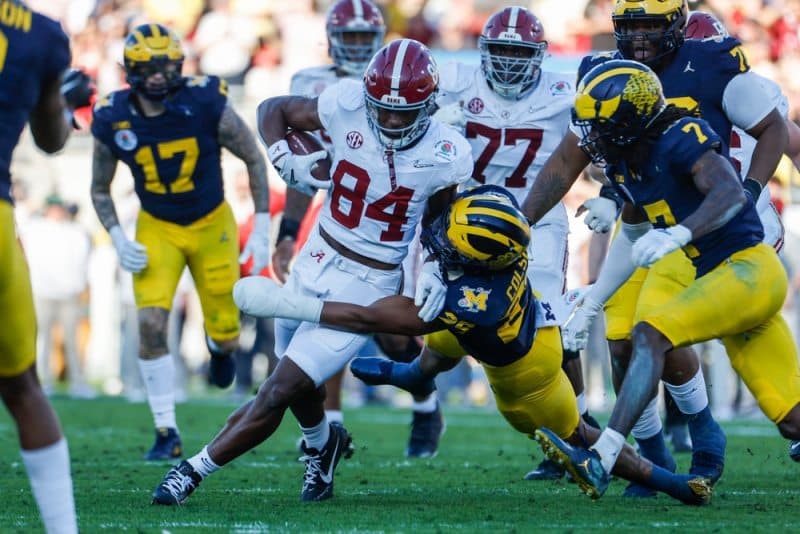
Executing an effective nickel defense strategy requires disguising coverage intentions before the quarterback reads the field.
Comparing nickel defense vs. dime defense clarifies how coordinators escalate secondary speed during obvious passing downs.
While a nickel package uses five defensive backs, a dime defense brings a sixth defensive back onto the field by removing another linebacker or defensive lineman. Coaches typically reserve dime packages for third-and-long situations where an offense must gain ten or more yards through the air. Nickel alignments offer far better balance against the run, whereas dime packages prioritize pure pass prevention.
Must Try: Football Speed Drills That Improve Real Match Acceleration
Understanding defensive personnel packages transforms ordinary television broadcasts into a fascinating tactical chess match. Throughout this football guide, we explained why five defensive back alignments dominate modern playbooks, detailed how extra secondary speed neutralizes slot receivers, and explored the versatile hybrid skills required to play in the slot. We also compared four lineman and three lineman fronts alongside six defensive back dime packages to show how coaches adapt to every down and distance.
Recognizing pre-snap alignments empowers fans to anticipate blitzes, coverage rotations, and offensive mismatches before the ball is snapped. Watching how coordinators balance run defense with pass coverage deepens your enjoyment of every game.
To explore expert athletic equipment reviews, discover top-rated training gear, and sharpen your sports knowledge today, visit our sports review portal to elevate your fan experience.
Philadelphia Eagles defensive coach Jerry Williams invented the nickel alignment during the 1960 NFL season to slow down legendary Chicago Bears tight end Mike Ditka. Williams substituted a fifth defensive back into the lineup specifically to match Ditka's rare combination of size and receiving speed across the middle of the field, forever changing defensive football strategy.
A big nickel package still places five defensive backs on the field but replaces the traditional agile slot cornerback with a third safety. Defensive coordinators deploy big nickel personnel against offenses using two tight ends or physical slot receivers, gaining extra tackling strength against the run without sacrificing deep pass coverage flexibility.
When offenses substitute two or three tight ends onto the field instead of wide receivers, lighter nickel defensive backs face significant size disadvantages against powerful run blockers. Offenses exploit this mismatch by running the ball directly at smaller slot defenders, forcing defensive coordinators to choose between absorbing rushing yards or substituting heavier linebackers back onto the field.
NFL scouts prioritize sudden short area quickness, fluid hip transitions, high football intelligence, and fearless tackling ability when evaluating slot cornerbacks. Because slot defenders operate in traffic without sideline boundaries, scouts value low three-cone drill times and rapid diagnostic instincts over pure straight-line top-end sprint speed.
Offensive pre-snap motion forces nickel defenders to communicate rapid coverage adjustments within seconds before the snap. When a receiver motions across the formation, the nickelback must decide whether to follow the receiver across the field in man coverage or pass the assignment off to a linebacker or safety in zone coverage without leaving open seams.


 What is a Technical Knockout (TKO) in Boxing and How it Work?
 What is Ring IQ in Boxing and How Can You Train it Better?
 What is Outboxing Style, and How Can You Master It?
 Southpaw Stance Explained: Techniques & Advantages
 Bare-Knuckle Boxing: The Raw Roots of Modern Boxing
 Top 5 Boxing Defense Drills that Every Boxer Needs to Master
 Top 10 Boxing Matches that People Still Rewatch in 2026