
Close

You've probably heard an announcer shout "touchback!" a dozen times without really knowing what it changes. So, what is a touchback in NFL football, exactly? It's one of those rules that sounds simple but trips people up once turnovers and rule tweaks get involved. Let's walk through it, play by play, so you're never left guessing during Sunday's game.
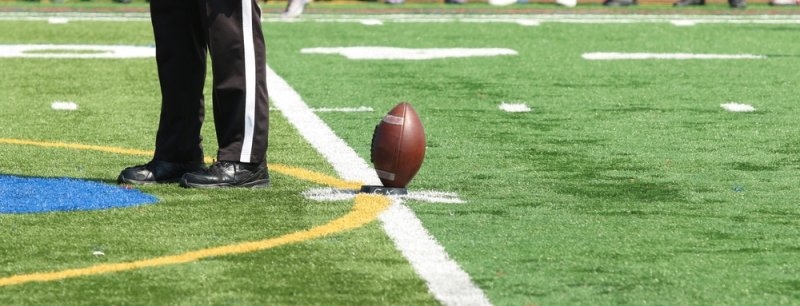
Put simply, a touchback happens when the ball dies in a team's own end zone and there's no return. Kickoffs cause most of them, but punts, interceptions, and fumbles can lead there too. Nobody scores on a touchback — but it still resets where the next drive begins, and that matters more than fans often realise.
This is the version most casual viewers actually picture when they hear the word. A returner drops to one knee in the end zone, or the kick just sails clean through it. Either way, the whistle blows, the return team gets the ball at a set spot, and play moves on from there.
Here's where a lot of newer fans get tangled up. A touchback vs safety comparison sounds technical, but the difference is actually pretty intuitive once you see it side by side. One is a calculated choice; the other is the defence flat-out stopping a ball carrier cold in his own end zone.
| Factor | Touchback | Safety |
| Points scored | None | 2 points for the defense |
| How it happens | Ball is downed in the end zone, no return | Ball carrier tackled with the ball in their own end zone |
| Who benefits | Receiving team gains field position | Defensive team scores and gets the ball back |
| Next play | Offense starts from the touchback spot | Team that allowed the safety must kick from its own 20 |
So how does a touchback work in football once you get past the basic definition? It really comes down to which play caused it — a kickoff, a punt, or a turnover behaves a little differently. Here's how each one plays out on the field.
A touchback on kickoff is the classic version — a returner takes a knee, or the ball flies untouched out the back. It's the play most fans think of first, and honestly, it's the easiest one to spot from the couch.
If a punt drifts into or through the end zone uncaught, that's an automatic touchback — no debate needed. And no, a returner can't scoop it up outside the zone and then backpedal to claim one. That loophole simply doesn't exist.
Interceptions and fumbles can end in a touchback too, if the defence downs the ball in its own end zone. Step outside that end zone after picking one off, though, and the touchback option disappears instantly. It's a smaller detail, but it trips up plenty of defenders in the moment.
Must Try: Best Plyometrics for Soccer: How to Build Match-Day Power?
The league didn't leave this rule alone forever — how does an NFL kickoff touchback work under today's format? The dynamic kickoff rules, made permanent for 2025, were built specifically to nudge teams toward returning the ball instead of playing it safe.
Boot the ball clean into or over the end zone, and it now comes back out to the 35. That's five yards worse than the old rule, and it's exactly why kickers stopped booming everything deep.
A kick that lands short and bounces into the end zone before being downed only goes to the 20. Kickers who land it closer to the goal line get rewarded with a shorter touchback for the offence.
Miss the landing zone entirely, and the kick comes up short of the 20? That one gets placed at the 40. It's a real penalty for a weak kick, and coaches notice it fast.
One of the most-Googled questions on this topic is simply where the ball is placed after a touchback. And honestly, that's fair — the spot shifts depending on exactly what caused the touchback in the first place. Here's the full breakdown.
| Scenario | Ball Placement (NFL) |
| Kickoff downed after flying into or over the end zone. | 35-yard line |
| Kickoff bounces into end zone before being downed | 20-yard line |
| Punt touchback | 20-yard line |
| Interception or fumble down in the end zone | 20-yard line |
If you're wondering when a touchback happens in the NFL, watch for one of a few clear signals during live action. A kneel, a raised arm, a ball sailing untouched out of the end zone — any of these locks it in immediately.
Once the ref makes the call, what happens after a touchback in the NFL is pretty anticlimactic, honestly. The offence just jogs out to the designated yard line and starts a brand-new set of downs. No penalty, no fuss — the clock and the game simply keep rolling forward.
Coaches think about touchback maths way more than casual fans realise during game planning. Losing five extra yards on every automatic touchback since the 30-to-35 shift adds up fast over a sixteen-game stretch. [Link: related NFL rules explainer on sportsreviews.com]
Special teams coordinators weigh their return unit's speed against the risk before waving off a touchback entirely. When a returner can realistically clear 35 yards, taking the touchback suddenly looks like the more conservative — and less appealing — choice. [Link: related NFL strategy breakdown on sportsreviews.com]
At the end of the day, the touchback rule in football isn't as complicated as it first sounds. Whether it's a kickoff, a punt, or a turnover, the same dead-ball logic applies every single time. Next time it comes up on screen, you'll already know exactly what's happening and why.
Also Read: Who are on the FIFA Club World Cup Winners List, 1930-2026?
Basically, the ball dies in a team's own end zone, and nobody runs it back. The receiving offence just starts fresh at a set yard line, and no points go on the board either way.
Interestingly, the NFL won't call this a touchback automatically — high school rules do, but the pros don't. Instead, the defence takes over right where the kick happened, or the 20 if it was closer than that.
Depends on the play. On a punt or kickoff, not really — that team was getting the ball regardless, so nothing's actually lost. But an interception or fumble touchback? That one's a genuine turnover, full stop.
Never — a touchback adds zero points for either team, period. All it really does is move the chains, setting up where the next drive kicks off, unlike a safety, which hands over two points instantly.
Mostly to stop kickers from just booming it out of the end zone every time. Pushing the spot to the 35 backed up the league's dynamic kickoff push, which leans hard into rewarding actual returns over easy touchbacks.


 Who are on the FIFA Club World Cup Winners List, 1930-2026?
  How are Football Wearables Changing the Modern Game?
  Best Plyometrics for Soccer: How to Build Match-Day Power?
  Understanding Different Football Positions & Their Roles
  Best Football Drills To Build Skills And Match Confidence
  The Ranking of the Most Valuable Football Teams in the World
  NFL Defensive Schemes: How Modern Defenses Stop QBs