
Close

Winning a Grand Slam is still the highest achievement in pro tennis. Even one major championship can define a career, while racking up several puts you in a completely different league—one of the sport’s true greats. The Australian Open, French Open, Wimbledon, and US Open draw millions of fans every year. They are tennis’s major championships, according to the International Tennis Federation. From epic suits to breathtaking fightbacks, these Grand Slam victors always press the video game ahead. This article will certainly inform you why these are so terrific, who the leading Grand Slam victors in men’s tennis are, a list of tennis Grand Slam winners, and which Grand Slam champs’ records are still to be defeated today.
| Category | Details |
| Number of Grand Slam Tournaments | 4 |
| Grand Slam Events | Australian Open, French Open, Wimbledon, US Open |
| Organized By | International Tennis Federation (ITF), in partnership with national associations |
| Played Every Year | January, May/June, June/July, August/September |
| Highest Prestige | Grand Slam titles are considered the pinnacle of professional tennis |
A Grand Slam tournament is one of four huge championships that top every tennis player’s wish list. There are bigger crowds, more money, more ranking points, and—let’s be honest—a lot more pressure. Win one, and you’re remembered forever. Win all four in your career—the Career Grand Slam—and you’ve joined the sport’s ultimate inner circle. Do it all in one calendar year? That’s as rare as sporting achievements get.
Every Grand Slam tests something different. Courts feel different, balls bounce funny, and the competition is as tough as it gets. Only the best adapt—and win—on every stage.
Every "Slam" has a personality of its own.
Tournament | Surface | Typical Month | Country |
| Australian Open | Hard Court | January | Australia |
| French Open | Clay | May–June | France |
| Wimbledon | Grass | June–July | England |
| US Open | Hard Court | August–September | United States |
Winning across all four shows more than just skill. You need insane focus, guts, and the ability to handle anything thrown your way.
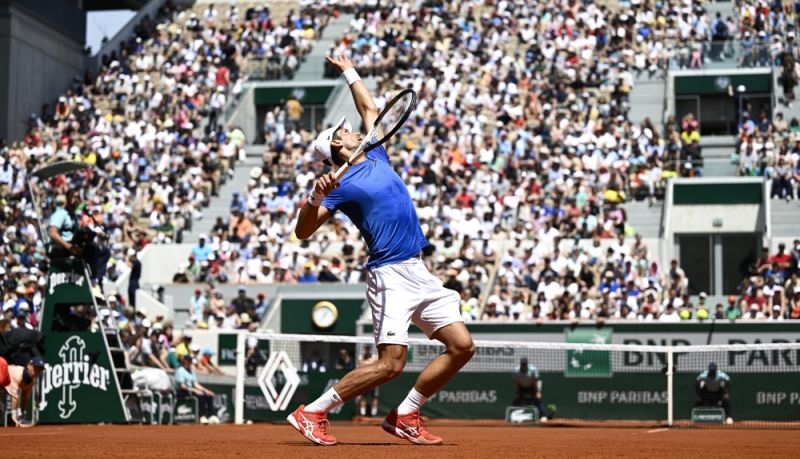
Men’s tennis is packed with history and icons who shaped the modern game.
| Player | Grand Slam Singles Titles* | Notable Achievement |
| Novak Djokovic | 24 | Most men's Grand Slam singles titles |
| Rafael Nadal | 22 | Record French Open champion |
| Roger Federer | 20 | Eight Wimbledon singles titles |
| Pete Sampras | 14 | Dominated men's tennis during the 1990s |
| Roy Emerson | 12 | First man to complete a Career Grand Slam in the Open Era's predecessor |
| Björn Borg | 11 | Six French Open and five Wimbledon titles |
| Rod Laver | 11 | The only man to achieve two Calendar Grand Slams |
| Andre Agassi | 8 | Career Grand Slam winner |
| Jimmy Connors | 8 | Former world No. 1 with remarkable longevity |
| Ivan Lendl | 8 | One of the most consistent champions of the 1980s |
Novak Djokovic stands alone at the top, with 24 Grand Slam singles titles. He’s won on every surface and dominated every era he’s played in.
Rafael Nadal? Fourteen French Open wins. You’ll hear him called “King of Clay"—and you get why each June in Paris. But he’s not just a specialist; he’s won everywhere.
Roger Federer’s name is linked to grace and control. His eight Wimbledon titles are still the record, and he played at the top for longer than anyone expected.
Then you’ve got Pete Sampras, who ruled the '90s, and Roy Emerson, the old-school star who completed a Career Grand Slam before it was even called that. And let's not forget Borg, Laver, Agassi, Connors, and Lendl—brutal in their consistency and indelible on the sport’s tapestry. And though it sounds clichéd in this context, the Federer-Nadal-Djokovic triumvirate wasn’t solely a conquest of titles. It pushed everyone to new heights. Their matches shaped two whole decades of tennis and set a bar that’ll be hard to match.
The evolution of women’s tennis has its own lineup of trailblazers who changed everything, from playing style to public perception.
Player | Grand Slam Singles Titles* | Notable Achievement |
| Margaret Court | 24 | Holds the record for the most Grand Slam singles titles |
| Serena Williams | 23 | Most Grand Slam singles titles in the Open Era |
| Steffi Graf | 22 | Only player to achieve the Golden Slam (1988) |
| Helen Wills Moody | 19 | Dominated women's tennis during the 1920s and 1930s |
| Chris Evert | 18 | Renowned for consistency on clay and hard courts |
| Martina Navratilova | 18 | Record nine Wimbledon singles titles |
| Billie Jean King | 12 | A champion on and off the court who transformed women's tennis |
| Monica Seles | 9 | Youngest French Open champion in the Open Era |
| Evonne Goolagong Cawley | 7 | One of Australia's greatest tennis champions |
| Venus Williams | 7 | Multiple Wimbledon and US Open champion |
Tennis didn’t always look like this.
Winning every major in a career—on grass, clay, and hard courts—is still a big deal. Only a handful pulled it off.
Pulling this off means you aren’t just good—you’re adaptable, driven, and unstoppable.
Some records stand out, even in a field of champions:
| Player | Record |
| Novak Djokovic | Most Men's Singles Grand Slam Titles (24) |
| Margaret Court | Most Women's Singles Grand Slam Titles (24) |
| Serena Williams | Most Grand Slam Singles Titles in the Open Era (23) |
| Roger Federer | Most Wimbledon Men's Singles Titles (8) |
| Martina Navratilova | Most Wimbledon Women's Singles Titles (9) |
| Rafael Nadal | Most French Open Men's Singles Titles (14) |
| Steffi Graf | Only Player to Achieve the Golden Slam (All Four Grand Slam Titles + Olympic Gold in the Same Year, 1988) |
These stats represent an insane level of excellence and consistency.
Grand Slam titles aren’t just trophies on a shelf. These tournaments draw the strongest fields, the toughest conditions, and the brightest spotlights. Men play best-of-five sets, draws are overflowing with hungry up-and-coming, and the pressure is always high.
Players who win again and again prove they’re not just talented but able to adapt to every new challenge. When people speak about the all-time great lists, the overwhelming starting point is the Grand Slam titles achieved.
Try This: Top Historic Tennis Matches That Shaped This Sport
The story of grand slam winners in tennis is a saga of fierce determination, relentless ambition, and moments etched in history. From those early pioneers who established the records to the current champions who continue to shatter expectations, grand slam winners in tennis are undoubtedly at the pinnacle of their sport. The classics of the early years, the titans of the modern era, or the aspiring stars of the future, all agree that a career across all four majors cements a legend forever.
There will always be fresh faces and shattered records, but the majors will always remain the ground zero for where tennis history is made. It Is Time To Save That Piece Of Tennis History For The Future. Every New Grand Slam is another testament to the continually writing history of tennis. The majors are events we watch with anticipation year after year, cheering for heroes and new heroes, while records continue to be broken, making tennis one of the most exciting games available.
Wimbledon holds a special place because of its history, its all-white dress code, and its classic grass courts, but all four Grand Slams are counted the same in the record books. They’re all massive.
A handful of players have. The Calendar Grand Slam—winning all four majors in one year—is ultra-rare. Don Budge, Rod Laver, Maureen Connolly, Margaret Court, and Steffi Graf are on that tiny, elite list.
Each Slam challenges players in a new way. Hard courts need all-rounders. Clay rewards endurance and tactics. Grass is about speed and reflexes. If you can win on all three, you’ve shown you belong among the very best.


 How to Improve Tennis Footwork with Proven Movement Drills?
  What are the Tennis Rules Every Beginner Should Know?
  Best Tennis Shoes for Hard Courts, Clay Courts, and Grass Courts
  Why Players Change Rackets and How It Impacts Performance?
  What is a Flat Serve in Tennis? Simple Guide for Players
  Tennis Grips 101: How Each Grip Type Impacts Your Game
  AI Coaching: Revolutionizing Tennis Training in 2025