
Close

If you have ever felt your heart race at the roar of screaming engines, you know the adrenaline of modern motorsport. Formula Drift stands as North America's premier professional drifting championship, turning raw horsepower into an incredible visual art. Originating on Japanese mountain roads, drifting has grown into a global spectacle drawing millions of passionate fans.
Recent sports media data indicates that drifting viewership has expanded over thirty percent among action sports fans. Traditional racing focuses purely on crossing the finish line first. However, drifting evaluates style, speed, steering angle, and line simultaneously. In this ultimate guide, we will break down Formula Drift rules, examine custom vehicle builds, master judging criteria, and uncover how aspiring racers step onto the professional grid.
Professional Formula Drift racing is a high-energy motorsport where drivers navigate a technical course sideways at high speeds. Established in 2003, this premier championship showcases world-class drivers competing in custom-built rear-wheel-drive vehicles.
Unlike conventional circuit racing, speed alone does not guarantee victory. The series emphasizes car control, precision weight transfer, and dramatic visual flair that keeps audiences on the edge of their seats.
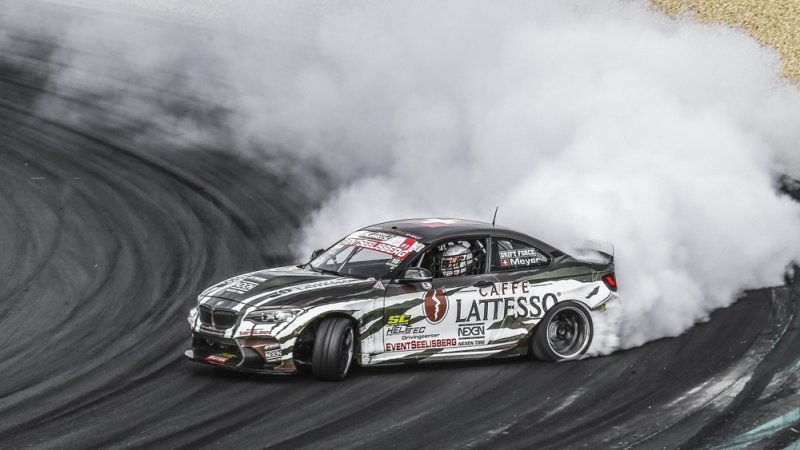
A standard Formula Drift competition pairs athletic driving skills with a structured knockout bracket format. The event begins with single-car qualifying rounds to establish driver seeding.
Top qualifying athletes advance to head-to-head tandem battles. During these battles, a lead car executes an ideal line while a chase car mirrors its movements closely through tight corners.
Understanding how are Formula Drift drivers judged comes down to three fundamental criteria evaluated by a panel of expert judges during every run.
Judges establish a dedicated line marked by outer clipping zones and inner clipping points. Drivers must sweep their bumpers precisely through these designated track areas.
Angle measures how sideways a vehicle travels through a corner. Maintaining an extreme sideways angle while preserving forward momentum earns maximum points.
Fluidity tracks smooth transitions between turns without jerky steering corrections. Style measures driver aggressiveness, proximity to track walls, and overall visual impact.
Must Try: Top 10 Youngest Formula 1 Drivers Ever to Hit the Grid
Fans often wonder what cars are used in Formula Drift when exploring technical paddock specifications. Competitors choose a light, agile rear-wheel-drive chassis equipped with heavily modified engines.
Popular models include the Nissan Silvia, Toyota GR Supra, Ford Mustang, and Mazda RX-7. Custom Formula Drift cars feature specialized steering lock kits, roll cages, and high-output engines producing up to 1200 horsepower.
Transitioning from local practice days to competitive grids requires technical discipline, reliable equipment, and consistent seat time.
Learning how to become a Formula Drift driver requires a clear progression path through regional grassroots series. Racers start by building experience in local drift events and earning an amateur competition license.
Promising drivers advance into the PROSPEC feeder series to hone their tandem skills. Strong performances in PROSPEC earn top athletes an official pro license, opening doors to major corporate sponsorships and international competition.
Essential Reads: F1 2025 Driver Line-Up Revealed: Who’s Racing for Each Team?
Understanding the mechanics behind professional drifting reveals why this high-energy motorsport continues to captivate automotive fans around the world. Throughout this guide, we explored the origins of sideways competition, defined the championship format, broken down essential judging criteria, analyzed high-horsepower car setups, listed core build preparation steps, and outlined the pathway to earning a professional competition license.
Whether you are tuning a project car in your garage, analyzing telemetry from home, or shooting trackside photos, getting involved in the drifting community offers unmatched excitement. Upgrade your motorsport journey today by equipping your garage with premium performance tools and attending a live event near you!
Are you ready to elevate your driving passion and push your vehicle performance to the limit? Equip your garage with high-performance components and take your passion for track action to the next level today!
Single qualifying runs feature individual cars on track aiming for a maximum score out of one hundred points based on line, angle, and style. Tandem battles pair two drivers together where a lead car runs the ideal qualifying line while a chase car mimics its movements as closely as possible without making contact.
Regulations mandate DOT-approved semi-slick street tires from official tire suppliers to ensure fair competition. Tire width limits correlate directly with total vehicle weight to maintain balanced grip levels across different engine builds on track.
Hydraulic handbrakes instantly lock the rear wheels independently from the foot brake pedal. This sudden lockup disrupts rear tire traction immediately, allowing drivers to initiate a drift cleanly at high entry speeds without losing forward momentum.
When two tandem runs yield identical judge scores, judges call a One More Time decision. Both drivers return to the starting line for an additional pair of lead and chase runs until a clear winner emerges through superior proximity or line precision.
Every competition vehicle must feature a full roll cage, automatic fire suppression systems, fuel cell enclosures, six-point safety harnesses, and protective side nets. Drivers must wear fire-retardant suits, gloves, boots, and approved helmets.


 What are the Most Popular Motorsports in the Market Today?
  The Future of Electric Motorsport and Sustainable Racing
  Top 6 Bikepacking Gear Trends Cyclists Should Know for 2026
  Motorsport Crashes: Entertainment or Necessary Risk Today?
  Top 10 Youngest Formula 1 Drivers Ever to Hit the Grid
  F1 2025 Driver Line-Up Revealed: Who's Racing for Each Team?
  Top 12 MotoGP 2024 Race Bike Liveries Ranked for 2024